F&L TECHNICAL SALES INC.
  • Home
  • About
  • Principals
    • Better Edge
    • Blue Photon
    • Dorian Tool
    • Hannibal Carbide
    • Heritage Cutter >
      • Brubaker
      • Data Flute
      • Decatur Diamond
      • Weldon
    • Hirt Line
    • Horn USA
    • Mate Workholding
    • Platinum Tooling
    • Rocky Mountain Twist
    • Techniks Group >
      • Techniks
      • Parlec Inc.
  • News
  • Contact
    • Promotions

Knurl Cutting vs. Knurl Forming: Understanding the Key Differences

9/20/2023

1 Comment

 
compiled and edited by Bernard Martin
​

Knurling is a machining process used to create a textured pattern on the surface of a workpiece, primarily for enhancing grip, aesthetic appeal, or as a means of indexing.

Two common methods employed in knurling are knurl cutting and knurl forming. While both processes achieve similar results, they differ significantly in terms of technique, applications, and outcomes.

In this article, we will delve into the distinctions between knurl cutting and knurl forming to help you better understand when and why each method is used.
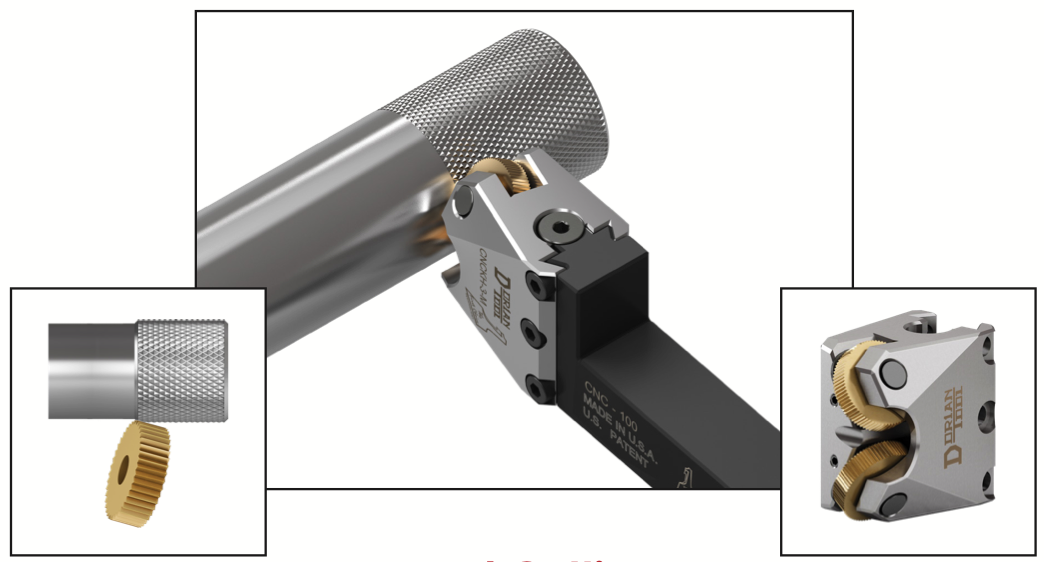
Dorian Tool Knurl Cutting Forming

Knurl Cutting

Process
Knurl cutting is a subtractive manufacturing process. It involves removing material from a workpiece to create the desired knurled pattern. This is typically done using a knurling tool that has sharp, hardened edges. As the tool rotates against the workpiece, it cuts into the material, forming ridges and grooves.

Tooling
Knurl cutting tools have teeth or serrations that cut into the material. These teeth come in various patterns and sizes, allowing for customization of the knurling design. The tool's sharp edges bite into the workpiece, displacing material to create the knurled texture.

Applications
Knurl cutting is ideal for materials that are harder and less malleable, such as stainless steel and hardened alloys. It is commonly employed in high-production environments where speed and efficiency are crucial.
​

Advantages
  • Precise control over knurling depth and pattern
  • Suitable for a wide range of materials
  • Easily customizable for specific applications

Disadvantages
  • Generates more waste material
  • May require higher machining forces
  • Produces more noise and vibration
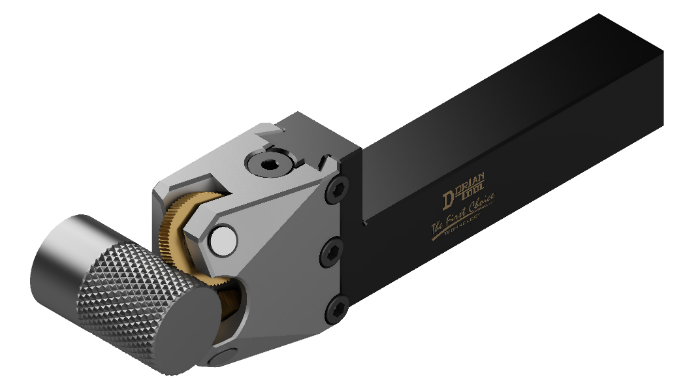
Cutting Type Knurling tools create a knurling pattern by material removal. The Cutting Knurling Process is performed when the knurling tool holds the knurling wheel with a lead angle that creates a sharp cutting edge.
​
The Knurl Cutting Tool is engineered to reduce the pressure exerted onto the work piece and minimize stress to the spindle of the lathe during the operation. The Cutting Style Tool is the best for knurling any material, including hard and large size work pieces as well as, for thin wall tubing.

The performance of the Dorian Tool Knurl Cutting Tool is up to 20 times faster than a conventional Knurl Forming Tool.

Knurl Forming

Process
Knurl forming, on the other hand, is a non-cutting or deformation process. It involves pressing or rolling a knurling tool against the workpiece's surface, displacing the material to create the knurled pattern. No material is removed during this process.

Tooling
Knurl forming tools have a smooth surface with the desired knurling pattern engraved onto them. These tools apply pressure to the workpiece, causing the material to deform and create the knurled texture. They are typically used in specialized knurling machines.

Applications
Knurl forming is often used when the material being worked on is soft or easily deformable. It is suitable for materials like plastics, brass, aluminum, and mild steel. Knurl cutting is also preferred when precise control over the knurling pattern and depth is required.
​

Advantages
  • Minimal material waste as no material is removed
  • Less force and energy required
  • Suitable for hard and brittle materials

Disadvantages
  • Limited control over knurling depth and pattern
  • Not as customizable as knurl cutting
  • Specialized machinery may be required
In summary, the choice between knurl cutting and knurl forming depends on various factors, including the material being worked on, the desired knurling pattern, and the level of precision required.

Knurl cutting offers greater control and customization but may generate more waste material.

Knurl forming, on the other hand, is faster and more efficient, making it suitable for high-production settings, especially with harder materials.

​Understanding the differences between these two methods will help manufacturers select the most appropriate technique for their specific applications, ensuring the desired knurled texture is achieved efficiently and effectively.
editors note: This article covers some of the questions that have been asked as a result of of previous article we posted: KNURL CUTTING VS KNURL FORMING
1 Comment
How to Eliminate Knurling Wheel Double Tracking

6/17/2020

0 Comments

 
HOW TO ELIMINATE KNURLING WHEEL DOUBLE TRACKING
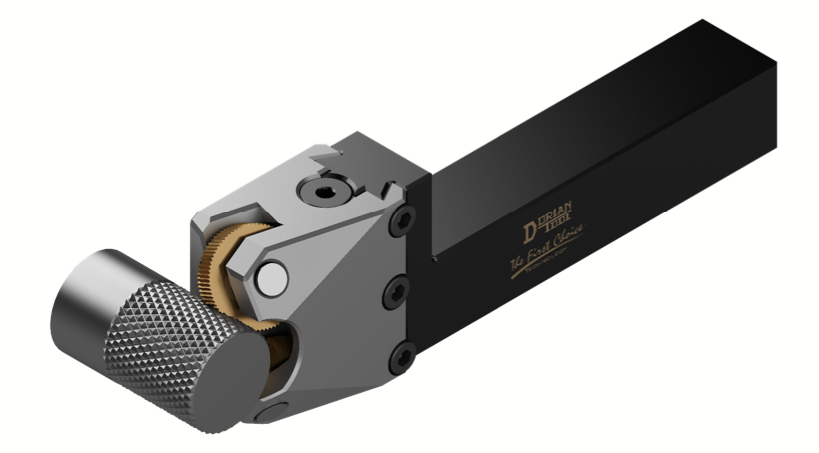
Double Tracking means that the knurling wheels are not tracking properly. In this situation, the knurling wheels will create a different pattern than the original design and may overlap or "double die"

There are two main causes of a knurling tool double tracking: 
  1. The knurl wheel isn’t set deep enough into the workpiece.  Dorian Tool recommends increasing the depth. The knurl depth should always equal 35% of the knurl pitch.
  2. The circumference of the work piece blank is not a multiple of the knurl pitch. To correct this, you must change the before-knurl diameter of the part or select a knurl wheel with a different pitch.

Dorian Tool  has developed a “Knurling Calculator Spreadsheet” that can calculate all of the parameters to avoid double tracking.

If you would like to request an electronic copy send us a note in the comments section below or, for faster results, in the form you get when you click the button below.  We'll quickly get a spreadsheet sent over to you!
Contact F&L Technical Sales
0 Comments

How To Eliminate Double Tracking of your Knurling Tool

4/17/2019

3 Comments

 
Tech Tip: Dorian Tool
How To Eliminate Double Tracking of your Knurling Tool
Double Tracking means that the knurling wheels are not tracking properly.

In this situation, the wheels will
create a different pattern than what the design was originally made for.  There are two main causes of this scenario:
  1. The knurl wheel isn’t set deep enough into the workpiece. We recommend increasing the depth. The knurl depth should always equal 35 percent of the knurl pitch
  2. The circumference of the work piece blank is not a multiple of the knurl pitch. To correct this, you must change the before-knurl diameter of the part or select a knurl wheel with a different pitch.

Dorian Tool Developed a “Knurling Calculator Spreadsheet” that can calculate all of the parameters to avoid double tracking. Request an electronic copy by emailing us at: [email protected]
3 Comments

    ABOUT

    This is where we publish technical articles, applications stories, tip and tricks, new product announcements and press releases.

    Archive

    August 2025
    July 2025
    June 2025
    May 2025
    April 2025
    March 2025
    February 2025
    January 2025
    December 2024
    November 2024
    October 2024
    September 2024
    August 2024
    July 2024
    June 2024
    May 2024
    April 2024
    March 2024
    February 2024
    January 2024
    December 2023
    November 2023
    October 2023
    September 2023
    August 2023
    July 2023
    June 2023
    May 2023
    April 2023
    March 2023
    February 2023
    January 2023
    December 2022
    November 2022
    October 2022
    September 2022
    August 2022
    July 2022
    June 2022
    May 2022
    April 2022
    March 2022
    February 2022
    January 2022
    December 2021
    November 2021
    October 2021
    September 2021
    August 2021
    July 2021
    June 2021
    May 2021
    April 2021
    March 2021
    February 2021
    January 2021
    December 2020
    November 2020
    October 2020
    September 2020
    August 2020
    July 2020
    June 2020
    May 2020
    April 2020
    March 2020
    February 2020
    January 2020
    December 2019
    November 2019
    October 2019
    September 2019
    August 2019
    July 2019
    June 2019
    May 2019
    April 2019
    March 2019
    February 2019
    January 2019
    December 2018
    November 2018
    October 2018
    September 2018
    August 2018
    July 2018
    June 2018
    May 2018
    April 2018
    March 2018

    Categories

    All
    52/96 Workholding
    Adhesive Workholding
    Aerospace Manufacturing
    Allen Benjamin
    ATC Alignment
    Better Edge
    Blue Photon
    Blue Photon Grip Pallet
    Boring
    Broaching
    Brubaker Tool
    BT Holders
    Carbon Fiber
    Case Study
    CAT Holders
    Chamfering
    Citizen
    Coating: Blue NACo
    Coatings
    Collet Nut
    Collets
    Collets: Lathe
    Composite Machining
    Coolant Lines
    Countersink
    Dataflute
    Dead Centers
    Deburring
    Decatur Diamond
    Definitions
    Diamond CVD
    Diamond PCD
    Dorian Tool
    Drilling
    Eastec
    Eccentric Turning
    End MIll
    EZ Burr
    Face Milling
    Fixturing
    F&L Technical Sales
    Fretting
    Geometry
    GMN Spindle
    Graphite Machining
    Grooving
    Guide Bushings
    GWS Tool Group
    Hannibal Carbide
    Heimatec
    Henninger
    Heritage Cutter
    High Speed Whirling
    Hirt-Line
    Hommel + Keller
    Horn FIrearms Tooling
    Horn Supermini
    Horn USA
    Hydraulic Toolholder
    IMTS
    Inserts
    JET Whirling
    ​Knurl Cutting
    ​Knurl Cutting
    Knurl Forming
    Knurling
    Live Centers
    Live Tooling
    Mate Workholding
    Medical Device
    Medical Manufacturing
    MegaFORCE
    Miyano
    Modern Industries
    ModLOC
    MPower
    Nexturn Swiss
    North American
    Parlec
    Part Marking
    Platinum Tooling
    Polygon Turning
    Practical Machinist
    Promotions
    Pull Studs
    Rapid Edge Program
    Reamers
    Recondition
    Retention Knobs
    REV Broaching
    RMT Rocky Mountain Twist
    RMT - Rocky Mountain Twist
    Routers
    Screw Threads
    ShrinkLOCKED
    Slot Cutting
    Slot Milling
    SpeedLOC
    Spindle Repair
    Spindle Speeder
    Spindle Wear
    Swiss
    Taps
    Taps: Bottom
    Taps: HSSE
    Taps: Plug
    Taps: Roll Form
    Taps: Taper
    Techniks
    Techniks SPINner
    Technocrats
    Tech Tip
    Tecnicrafts
    Threadmilling
    Toolholders
    Triton Chucks
    Troubleshooting
    Turbo-Whirling
    Turn Whirl Milling
    Turret
    USMTO
    Weldon Flat
    Weldon Tool
    Workholding
    Workholding Jaws
    Zero Point

    RSS Feed

Home
About
Principals
Contact
F&L Technical Sales Logo Square
F&L Technical Sales Inc.
326 Woodland Way
Russell, MA 01071
Established 1999
© 2024 F&L Technical Sales Inc.
All Rights Reserved
site design: Rapid Production Marketing
  • Home
  • About
  • Principals
    • Better Edge
    • Blue Photon
    • Dorian Tool
    • Hannibal Carbide
    • Heritage Cutter >
      • Brubaker
      • Data Flute
      • Decatur Diamond
      • Weldon
    • Hirt Line
    • Horn USA
    • Mate Workholding
    • Platinum Tooling
    • Rocky Mountain Twist
    • Techniks Group >
      • Techniks
      • Parlec Inc.
  • News
  • Contact
    • Promotions